Temporary Trackways & Access Infrastructure: Protecting Ground Conditions Without Compromise
For many events, construction projects and commercial operations, success is not defined solely by the structure itself, but by how people, vehicles and equipment reach it. From private estates in Hampshire to urban developments in London, access is often the most overlooked – and most critical – element of any temporary installation.
A beautifully designed marquee or temporary building can quickly become compromised if vehicles churn up the ground, deliveries are delayed, or guests are forced to navigate muddy or unstable terrain. In contrast, when access is carefully planned and professionally executed, everything flows – discreetly, efficiently and without disruption.
This is where temporary roadway and trackway hire becomes indispensable.
When integrated properly with wider infrastructure – including temporary structures and operational spaces – trackways ensure seamless logistics, protect valuable ground, and maintain the standard of presentation expected in high-end environments.
“The most successful temporary installations are not just well-designed – they are well-accessed.”
What Is Temporary Trackway?
Temporary trackway systems are modular access solutions designed to create stable, durable surfaces over ground that would otherwise be unsuitable for vehicles or foot traffic.
Unlike permanent roads, they:
- Require no excavation or groundworks
- Can be installed quickly and efficiently
- Are fully removable, leaving little or no trace

This makes them particularly valuable in environments where preserving the ground is just as important as enabling access.
Trackways are commonly used across:
- Events and hospitality
- Construction and development
- Heritage and conservation sites
- Agriculture and rural operations
In each case, the objective is the same: to provide reliable access without permanent impact.
How Temporary Roadways Work
Understanding how temporary roadways work is key to appreciating their role in modern project delivery.
At a technical level, trackway systems function by distributing loads across a wider surface area. Instead of pressure being concentrated beneath tyres or footfall, it is spread across interlocking panels, significantly reducing the risk of ground damage.
 Key Principles of Trackway Systems
- Load Distribution
Heavy vehicles – from delivery lorries to cranes – exert significant downward force. Trackway panels spread this load evenly, preventing sinking or rutting.
- Surface Protection
The panels act as a protective layer between activity and the ground, preserving lawns, soil structure and landscaping.
- Stability and Traction
Engineered surfaces provide grip in all conditions, including rain, frost and mud – a crucial consideration in the UK climate.
- Modular Flexibility
Panels can be configured to suit the specific layout of a site, accommodating obstacles such as trees, buildings or uneven terrain.
The result is a temporary roadway that performs like a permanent surface, but without the cost, disruption or environmental impact of traditional construction.
When Is Trackway Required?
While some sites naturally lend themselves to vehicle access, many do not. Even locations that appear suitable in dry conditions can quickly become problematic when weather changes or usage increases.
Trackway is typically required in the following scenarios:
Soft or Waterlogged Ground
Grass, soil and unmade surfaces are highly vulnerable to damage under load. A single delivery vehicle can leave deep ruts that are costly – and sometimes impossible – to repair.
Temporary trackways provide immediate reinforcement, allowing access without deterioration.
Sensitive or High-Value Sites
Many projects take place in environments where ground preservation is essential:
- Private gardens and landscaped estates
- Historic properties and listed buildings
- Parks and public spaces
- Agricultural land
Using a temporary trackway for sensitive sites ensures that work can proceed without compromising the integrity or appearance of the location.
Heavy Equipment and Logistics
Temporary installations often rely on complex logistics, including:
- Delivery vehicles
- Forklifts and telehandlers
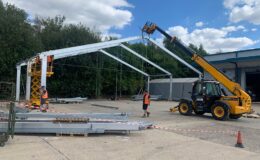
- Cranes and lifting equipment
Without a stable access route, these operations become inefficient – and potentially unsafe.
High Footfall Environments
Events in particular can place significant strain on natural surfaces. Guest movement, combined with catering and service activity, can quickly lead to mud, erosion and uneven ground.
Trackways provide:
- Clean, defined walkways
- Improved accessibility
- A more polished and professional environment

Applications Across Sectors
One of the defining strengths of temporary roadway and trackway hire is its adaptability. The same core system can be tailored to vastly different environments.
Events and Hospitality
In high-end event settings, presentation is everything. Trackways are often designed to remain discreet, supporting operations without detracting from the aesthetic.
They can be used to:
- Create hidden service routes for suppliers
- Protect lawns and landscaped areas
- Provide safe, clean pathways for guests
- Maintain usability in adverse weather
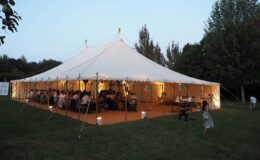
When combined with temporary structures, they form part of a seamless guest experience, where logistics are invisible but highly effective.
Construction and Development
On construction sites, access is fundamental to productivity.
Temporary roadways:
- Enable consistent movement of materials
- Reduce delays caused by poor ground conditions
- Improve safety for workers and machinery
They are particularly valuable during early project phases, before permanent infrastructure is in place.
Heritage and Conservation Sites
Working within historic or environmentally sensitive locations requires a careful balance between access and preservation.
Trackway systems provide:
- Non-invasive installation
- Full removability
- Protection of underlying surfaces
This makes them an ideal solution for estates, conservation areas and protected landscapes.
Agriculture and Rural Operations
In rural settings, seasonal demands often require temporary access across fields or open land.
Trackways support:
- Harvest logistics
- Temporary storage operations
- Access during wet or unpredictable weather
Crucially, they help preserve soil condition and reduce long-term impact on the land.
Integration with Temporary Structures
Trackways are most effective when considered as part of a wider infrastructure strategy, rather than as a standalone solution.
For example:
- A storage marquee requires reliable delivery and loading access
- An event space depends on safe and attractive guest pathways
- A temporary workspace needs consistent operational flow
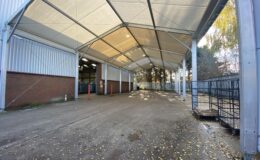
By integrating trackways with solutions such as storage marquees, it is possible to create a fully functional environment that supports both logistics and presentation.
This joined-up approach:
- Reduces operational risk
- Improves efficiency
- Enhances the overall quality of the installation

Environmental and Practical Benefits
Temporary trackways offer a compelling combination of performance and environmental responsibility.
Minimal Ground Impact
Because they sit on top of the surface rather than altering it, they preserve the condition of the ground beneath.
Reusability
Trackway panels are designed for repeated use across multiple projects, reducing material waste.
Rapid Installation and Removal
Systems can be deployed quickly and removed just as efficiently, minimising disruption.
Reduced Remediation Costs
By preventing damage in the first place, trackways eliminate the need for costly repairs or reinstatement.
Overcoming Common Site Challenges
Even well-planned projects can encounter unexpected obstacles. Trackways provide practical solutions to a range of common challenges.
Weather Disruption
Rain can quickly turn grass into mud, halting operations.
Solution: Trackways provide a stable, all-weather surface.
Restricted Access
Urban sites, courtyards and heritage locations often present logistical constraints.
Solution: Modular systems can be adapted to complex layouts.
Ground Damage
High-value surfaces require protection from heavy use.
Solution: Load distribution prevents rutting and compaction.
Safety Risks
Unstable ground increases the likelihood of accidents.
Solution: Trackways create predictable, secure routes for both vehicles and pedestrians.
Planning for Complex and Restricted Sites
Modern projects increasingly take place in challenging environments – from rooftops and courtyards to sites with limited access points.
In these scenarios, early planning is essential.
Trackways can be designed to:
- Navigate tight or awkward spaces
- Integrate with existing architecture
- Support installations where traditional access is not possible
This flexibility makes them a critical component in delivering projects that might otherwise be unfeasible.
Why Early Planning Matters
One of the most common oversights in project planning is treating access as an afterthought.
In reality, it should be considered from the outset.
Early integration of trackways allows for:
- More efficient site design
- Better coordination with structures and logistics
- Reduced installation time
- Lower overall risk
It also ensures that the solution is tailored to the specific needs of the site, rather than adapted under pressure.
A Quiet but Essential Component
Temporary structures often take centre stage – whether as elegant event spaces or practical operational facilities.
Yet behind every successful installation is a network of infrastructure that makes it possible.
Temporary trackways may not always be visible, but their impact is significant:
- They protect valuable landscapes
- Enable reliable logistics
- Improve safety and usability
- Support operations in challenging environments
In many cases, they are the difference between a project that simply works and one that runs seamlessly.
Conclusion
As projects become more ambitious and sites more complex, the importance of access infrastructure continues to grow.
Whether you are planning an event on a private estate, managing a construction project, or operating within a sensitive environment, temporary roadway and trackway hire provides a practical, flexible solution.
By understanding how temporary roadways work and when to deploy a temporary trackway for sensitive sites, it is possible to protect the ground, maintain operational efficiency and deliver a higher standard of execution.
In short, the right access solution does more than connect A to B – it underpins the success of the entire project.