Marquee Lighting Ideas for Elegant Evening Events
How to create atmosphere, warmth and impact under canvas
Lighting is one of the most powerful elements in marquee design. It changes how a space feels, how guests move through it, how photographs look, and how the event shifts from day into evening. In a beautifully dressed marquee, lighting is not simply there so people can see. It sets the tone.
For weddings, private parties, gala dinners, corporate receptions and milestone celebrations, the right marquee lighting can turn a temporary structure into a sophisticated evening venue. It can draw attention to floral displays, soften the dining space, highlight architectural features, illuminate pathways, create drama on the dance floor and bring gardens or buildings into the wider event design.
Four Seasons Marquees offers a wide range of internal and external lighting options, including crystal chandeliers, narrow beam pin spots, LED uplighters, downlighters with DMX colour-change controllers, service lighting, emergency lighting, flood lights, garden lighting and outdoor feature lighting. Used well, these elements can create a layered lighting scheme that feels considered, elegant and appropriate to the setting.
This guide explores marquee lighting ideas for elegant evening events, with practical inspiration for clients planning celebrations in Hampshire, Surrey, London and the surrounding areas.
 Why marquee lighting matters
A marquee gives you a rare opportunity to design an event space from the ground up. Unlike a fixed venue, where lighting may be limited by existing fittings, a marquee can be shaped around the mood, layout and purpose of the occasion.
Lighting can help define each part of the event. A soft wash of warm light can make a dining area feel intimate. Pin spots can highlight table centres. Festoon lighting can introduce charm and informality. Chandeliers can add formality and refinement. Garden lighting can extend the sense of occasion beyond the marquee itself.
For evening events in particular, lighting has to do several jobs at once. It needs to create atmosphere, support guest comfort, allow safe movement and work beautifully with flowers, furniture, flooring, linings and exterior surroundings. The most successful schemes are rarely based on one single lighting feature. They are layered, balanced and planned around the experience of the evening.
Start with the style of event
Before choosing individual fittings, it helps to think about the overall character of the occasion.
A black-tie dinner may call for chandeliers, warm uplighting, carefully focused table lighting and a more controlled colour palette. A summer wedding might suit festoon lights, soft exterior lighting and a gentle transition from daylight to dusk. A corporate launch may require a combination of practical lighting, branded colour washes, stage lighting, feature illumination and more dramatic lighting effects.
The structure itself will also influence the decision. A traditional pole marquee or canvas pole tent often suits softer, warmer and more romantic lighting. A clearspan frame marquee can support a cleaner, more contemporary scheme with truss lighting, uplighters, downlighters and controlled colour changes. Pagodas, awnings and entrance structures may need their own lighting to create a polished arrival experience.
This is why marquee lighting should be considered early in the planning process, rather than treated as a finishing touch. The position of tables, bars, dance floors, entrances, catering areas and outdoor routes all affect the lighting design.
Chandeliers for classic elegance
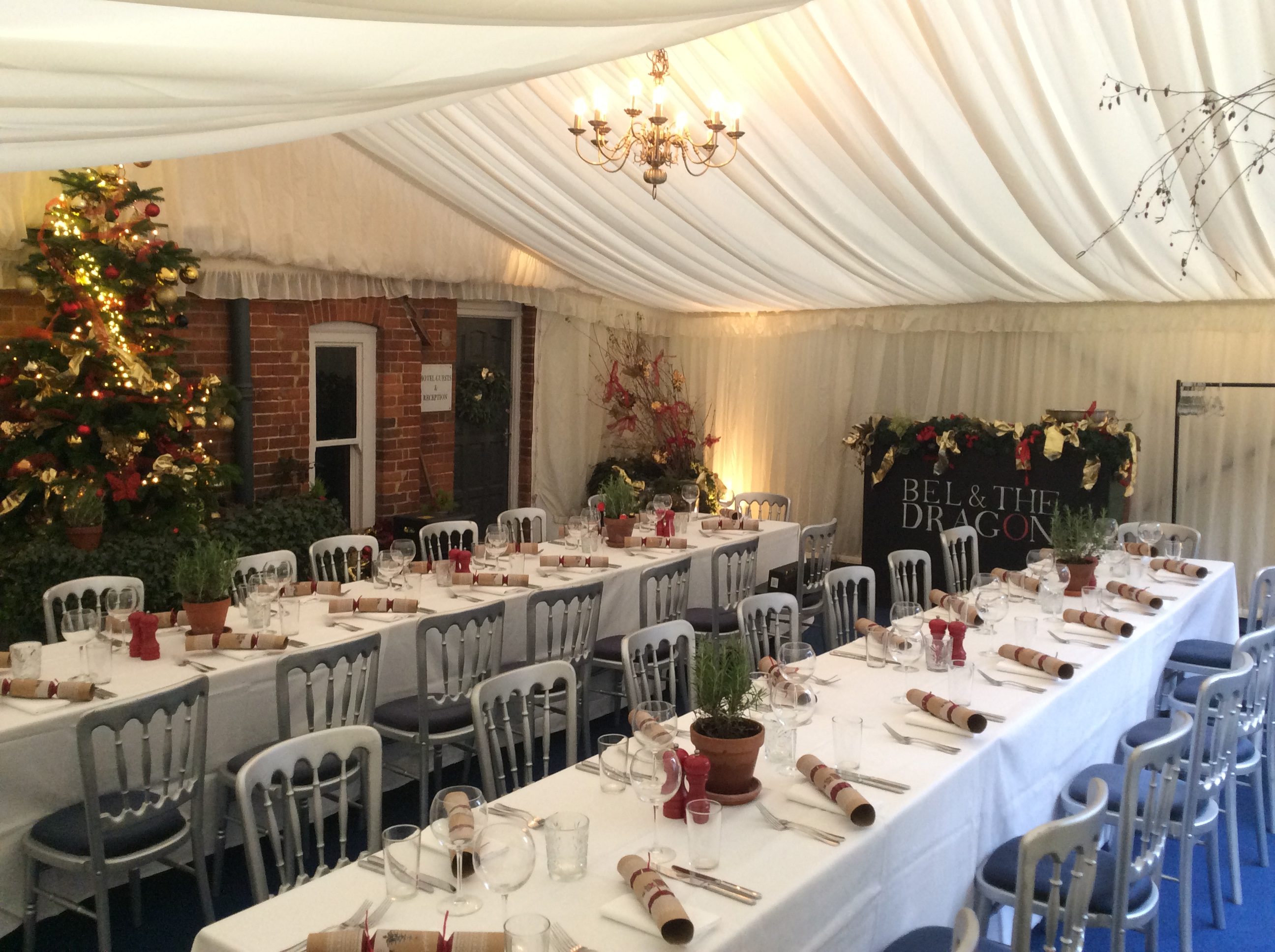
Crystal chandeliers remain one of the most elegant marquee lighting ideas for formal evening events. They bring height, sparkle and a sense of permanence to a temporary space. In a wedding marquee, chandeliers can work beautifully above long dining tables, central walkways, dance floors or reception areas.
They are particularly effective when paired with lined ceilings, ivory interiors, classic furniture and soft floral arrangements. A chandelier does not have to dominate the space. In many marquees, the best effect comes from a series of carefully placed fittings that create rhythm and proportion across the interior.
For high-end weddings and private parties, chandeliers are ideal when the brief is refined rather than theatrical. They provide visual interest during the day and become increasingly atmospheric as natural light fades. In photographs, they also help frame the interior, giving the marquee a more finished and architectural feel.
Festoon lighting for warmth and charm
Festoon lighting is one of the most versatile options for marquee events. It works especially well for relaxed but stylish evening occasions, where the aim is to create warmth without making the space feel overly formal.
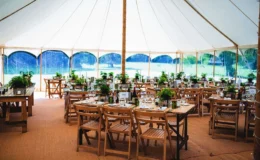
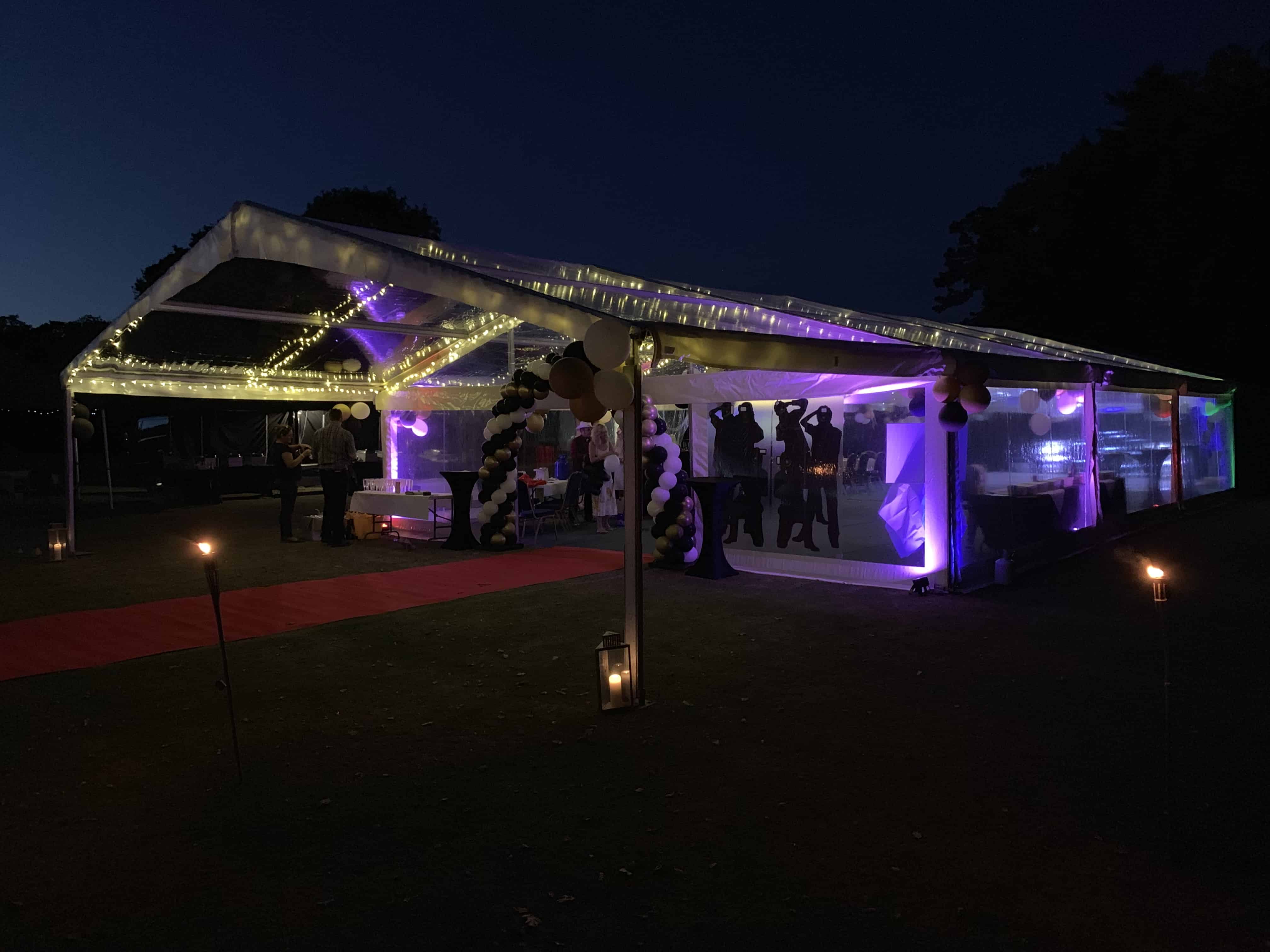
Inside a pole marquee, festoon lights can follow the lines of the structure, emphasising the shape of the canopy and adding a soft glow above guests. Outside, they can be used to connect the marquee to a terrace, garden, pathway or adjoining building. This is particularly useful for country house weddings, garden parties and private celebrations where the outdoor setting is part of the experience.
Festoon lighting has a pleasing informality, but it can still look sophisticated when used with restraint. The key is to avoid making it feel too busy. A well-planned arrangement of warm festoon lights can create a relaxed evening atmosphere while still feeling polished and intentional.
LED ceiling canopies and starcloth ceilings
For clients looking to create a more immersive evening setting, LED ceiling canopies and starcloth ceilings can be highly effective.
An LED ceiling canopy can bring subtle sparkle to the marquee interior, particularly over a dining area or dance floor. It works well for weddings, winter parties and evening receptions where guests will spend several hours inside the marquee after dark. Four Seasons’ lighting options include medium-density LED ceiling canopies and ivory or black LED starcloth ceilings, also described as Nightsky ceilings.
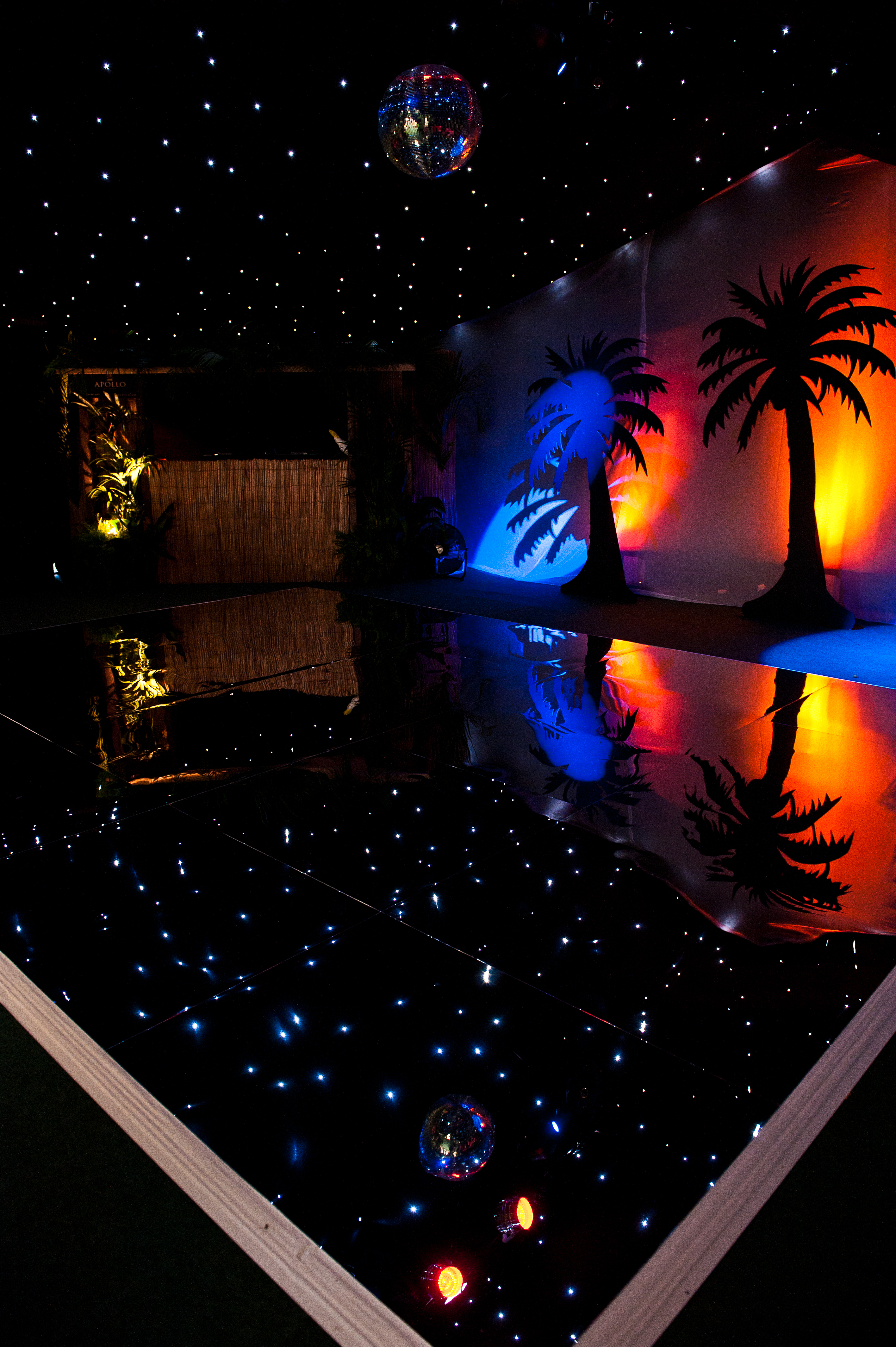
Starcloth ceilings are especially effective when the event moves into a party atmosphere. An ivory starcloth can feel romantic and soft, while a darker blackout starcloth creates a more dramatic night-time effect. This can be useful when the evening includes dancing, entertainment or a late-night bar.
These treatments should be used thoughtfully. They are most successful when they suit the structure, the event style and the rest of the interior scheme. When combined with the right flooring, furniture and lighting control, they can turn a marquee into a memorable evening venue.
Uplighters for colour, depth and atmosphere
Uplighters are a simple but powerful way to change the feel of a marquee. Positioned around the walls, poles or structural features, they add depth and help prevent the interior from feeling flat after dark.
Warm white uplighting is often the most elegant choice for weddings and formal dining. It creates softness and complements flowers, table linen, ivory linings and natural materials. Coloured uplighting can be effective for corporate events, brand activations, parties and dance floors, particularly where the lighting needs to reflect a theme or identity.
Four Seasons offers white uplighters with dimmer control and optional coloured gels, as well as LED uplighters and downlights with DMX control. This level of control allows the lighting to evolve throughout the evening. For example, the dining space might begin with warm, understated lighting before shifting to a richer colour palette for dancing.
This flexibility is one of the great advantages of marquee lighting. The space can change mood without changing layout.
Pin spots for tables, flowers and focal points
Narrow beam pin spots are particularly useful when you want to draw attention to specific details. They can be aligned to table centres, floral arrangements, bars, cakes, signage or display areas.
For luxury weddings and formal dinners, pin spotting can make a significant difference. Tall floral centrepieces can disappear into the shadows without proper lighting, especially once the evening begins. A carefully placed pin spot ensures the investment in flowers, table design and decorative details is visible throughout the event.
Pin spots also help create contrast. Rather than flooding the whole marquee with equal brightness, they allow key areas to stand out. This creates a more sophisticated visual effect and can make the space feel more intimate, even when the marquee is large.
Lighting the dance floor
The transition from dinner to dancing is one of the most important moments in an evening event. Lighting plays a central role in signalling that change.
A dining marquee may begin with warm chandeliers, subtle uplighting and table-focused illumination. Later in the evening, the dance floor can be brought to life with mirror balls, moving heads, RGB LED apex lights, truss lighting or controlled colour effects. Four Seasons’ lighting options include mirror balls, moving heads, RGB LED apex lighting to the dance floor and overhead truss lighting with a control desk and operator.
The best dance floor lighting feels integrated rather than bolted on. It should work with the band or DJ, the bar position, the ceiling treatment and the guest flow. If the dance floor is too dark, it can feel uninviting. If it is too bright too early, it can interrupt the atmosphere of dinner. A good lighting plan allows the evening to build naturally.
For weddings, this can help create a memorable first dance moment. For parties and corporate events, it can turn a formal reception into a lively evening celebration.

Exterior lighting for arrival and atmosphere
Some of the most effective marquee lighting is outside the marquee.
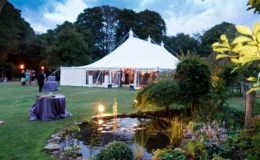
Exterior lighting helps guests arrive safely, find their way between spaces and appreciate the setting after dark. It can also transform the look of a garden, driveway, courtyard, country house, terrace or woodland edge. Four Seasons notes that highlighting trees and buildings can create a magical atmosphere, while outdoor lighting is also important for safety as evenings grow dark.
For elegant evening events, exterior lighting might include:
- warm lighting along pathways
- feature lighting for trees
- soft illumination for building façades
- lighting around entrances and awnings
- flood lighting for service areas
- garden lighting around terraces or drinks spaces
- flambeaux or decorative exterior features
This approach is particularly relevant for private homes and country estates, where guests may be moving between a house, marquee, garden and parking area. It is also valuable for winter events, when darkness falls earlier and outdoor routes need to be clearly lit.
Entrance lighting and covered walkways
First impressions matter. The entrance to a marquee sets the expectation for the whole event.
A well-lit entrance can make a marquee feel welcoming, considered and connected to its surroundings. This might include subtle lighting around a pagoda entrance, uplighters beside a covered walkway, lantern-style features, festoon lighting or carefully placed exterior fittings.
For evening weddings, arrival lighting helps create anticipation. For corporate events, it can support branding and guest management. For private parties, it can make the approach feel more generous and hospitable.
Lighting also has a practical role here. Steps, changes in ground level, matting, temporary roadways, garden paths and parking routes all need to be considered. The aim is to combine safety with atmosphere, so the event feels seamless rather than over-lit.

Matching lighting to marquee interiors
Lighting should never be planned in isolation. It needs to work with the wider interior scheme.
Flooring, carpets, linings, furniture, flowers and table settings all affect how light behaves inside the marquee. Pale linings and ivory interiors reflect light softly. Darker areas absorb more light and may require a different approach. Glossy dance floors, mirrored surfaces, glassware and metallic details can add sparkle, while natural textures such as wood and canvas create warmth.
For a formal wedding breakfast, the lighting might be soft and flattering. For a brand event, it may need to be sharper and more controlled. For a winter party, warmth and depth may be more important than brightness.
A layered scheme usually works best. This might include chandeliers for elegance, pin spots for tables, uplighters for atmosphere, festoon lights for warmth, exterior lighting for context and dance floor lighting for the later part of the evening.
Lighting for winter marquee events
Winter events need particular attention. Shorter days mean lighting becomes important much earlier, often from the moment guests arrive.
A winter marquee should feel warm, inviting and protected from the weather. Lighting can help create that impression before guests even step inside. Covered entrances, illuminated paths, warm interior lighting, starcloth ceilings and subtle exterior feature lighting can all contribute to the sense of occasion.
Heated marquees also benefit from careful lighting because warmth is not only physical. A marquee that is technically warm but visually stark may still feel cold. Warm white lighting, soft uplighters, candles on tables where appropriate, chandeliers and rich interior finishes can make a winter event feel comfortable and atmospheric.
For Christmas parties, winter weddings and festive corporate events, lighting can be used to create a sense of theatre without overwhelming the space. The aim is elegance, not excess.
Lighting for corporate evening events
Corporate marquee lighting often has a slightly different role. It still needs to create atmosphere, but it may also need to support presentations, networking, branding, hospitality or product display.
For a corporate reception, lighting can help define zones: arrival, registration, drinks, dining, presentation, bar and informal seating. For a product launch or brand activation, colour-changing LED lighting can reflect brand colours or highlight key installations. For hospitality events, a more understated lighting scheme may be used to create a polished environment for guests, clients and stakeholders.
The flexibility of a marquee makes this particularly valuable. With the right lighting design, the same temporary structure can feel like a conference space, private dining room, hospitality lounge or evening party venue.
Practical considerations when planning marquee lighting
Good lighting is both creative and practical. When planning an evening marquee event, consider:
- how guests will arrive and leave
- where daylight will fade first
- whether lighting needs to change during the evening
- the position of tables, bars and dance floors
- whether there will be a band, DJ or stage
- where generators, power supplies and service lighting are needed
- whether emergency lighting is required
- how the exterior setting should be lit
- how lighting will look in photography
- whether any nearby residents or venues may be affected by brightness
Experienced marquee suppliers can advise on these details during the planning process. A site visit is often valuable, particularly for private homes, rural locations, restricted access sites or venues where the marquee is being built around existing landscaping or architecture.
Creating an elegant evening under canvas
The most successful marquee lighting schemes feel effortless, but they are always carefully planned. They consider the structure, the setting, the guest journey and the mood of the event from arrival to departure.
For an elegant evening event, lighting should do more than illuminate the space. It should reveal the detail, flatter the interior, enhance the setting and support the rhythm of the occasion. From chandeliers and festoon lights to uplighters, pin spots, LED canopies, starcloth ceilings and exterior garden lighting, each element has a part to play.
Four Seasons Marquees provides atmospheric lighting for internal and external use, with options ranging from practical service and emergency lighting to decorative and specialist effects. For clients planning weddings, private parties and corporate events across Hampshire, Surrey and London, this allows the marquee to become more than a structure. It becomes a complete evening environment, designed around atmosphere, comfort and impact.
To discuss lighting ideas for your event, visit the Four Seasons Marquees lighting page or contact the team to arrange a conversation about your plans.
FAQ: Marquee Lighting Ideas for Evening Events
What is the best lighting for a wedding marquee?
The best lighting for a wedding marquee depends on the style of the event. Chandeliers, warm white uplighters, pin spots, festoon lighting and LED ceiling canopies are all popular options. For a formal wedding, chandeliers and table-focused lighting can create elegance. For a more relaxed celebration, festoon lights and warm uplighting may be more suitable.
Can you have chandeliers in a marquee?
Yes, chandeliers can be used in many marquee structures and are a popular choice for elegant weddings, gala dinners and formal evening events. They work particularly well with lined interiors, long dining tables and classic floral schemes.
How do you light a marquee for an evening event?
A successful evening marquee usually uses layered lighting. This may include general lighting, table lighting, feature lighting, exterior lighting, entrance lighting and dance floor lighting. The aim is to create atmosphere while ensuring guests can move safely and comfortably throughout the event.
Are festoon lights suitable for luxury marquee events?
Yes. Festoon lights can be used very effectively at luxury marquee events when they are planned carefully. They are especially good for creating warmth, charm and a relaxed evening atmosphere, particularly in gardens, pole marquees, entrance areas and outdoor terraces.
What is a starcloth ceiling?
A starcloth ceiling is a fabric ceiling treatment with small LED lights that create a night-sky effect. It can be used to add atmosphere to a marquee, particularly for evening receptions, winter parties, weddings and dance floor areas.
Can marquee lighting be colour controlled?
Yes. LED uplighters and downlights can be controlled using DMX systems, allowing colours and lighting levels to change during the event. This is particularly useful for corporate events, parties, dance floors and occasions where the mood changes from dinner to dancing.
Do I need exterior lighting for a marquee?
Exterior lighting is strongly recommended for evening events. It helps guests move safely between parking, entrances, gardens, buildings and the marquee. It can also enhance the atmosphere by illuminating trees, pathways, façades and outdoor features.
How can lighting make a winter marquee feel warmer?
Warm white lighting, chandeliers, uplighters, starcloth ceilings, candles where appropriate, and carefully lit entrance areas can all help a winter marquee feel warmer and more inviting. Lighting should be planned alongside heating, flooring and interior finishes.
Can marquee lighting be used for corporate branding?
Yes. Colour-changing LED lighting, uplighters, truss lighting and feature lighting can be used to support brand colours, product displays, stages, presentation areas and hospitality spaces. This makes marquee lighting particularly useful for corporate events and brand activations.
When should marquee lighting be planned?
Marquee lighting should be discussed early in the planning process. The best lighting schemes are designed around the layout, structure, guest flow, power requirements, exterior setting and the overall style of the event.