Designing the Right Storage Marquee: What Businesses Need to Consider Before Installation
By the time most businesses begin researching storage marquees, the decision to create additional space has already been made.
The real challenge lies not in whether to install a structure, but in ensuring it is specified correctly from the outset.
A poorly considered solution can introduce inefficiencies, disrupt workflows or limit future flexibility. By contrast, a well-designed storage marquee integrates seamlessly with existing operations — functioning not as a temporary fix, but as a purposeful extension of the business.
For organisations across Hampshire, Surrey and London, where space is often constrained and time pressures are high, getting this right is essential.
This guide explores the key considerations that underpin a successful installation, helping businesses make informed decisions and maximise the long-term value of their investment.
1. Defining the Purpose: More Than Just Extra Space
Before discussing dimensions or materials, it is essential to establish exactly how the structure will be used.
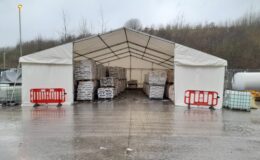
Storage marquees are remarkably versatile, but different applications demand different configurations. A facility designed for bulk pallet storage will have very different requirements to one used for packing, dispatch or housing machinery.
Common use cases include:
-
High-volume pallet storage
-
Racked warehouse systems
-
Machinery and plant protection
-
Order fulfilment and dispatch areas
-
Covered loading and unloading zones
Each of these influences the design — from internal height and access points to flooring and layout. Taking the time to define operational requirements at this stage ensures the structure supports, rather than constrains, day-to-day activity.
2. Size, Span and Height: Getting the Fundamentals Right
One of the most common — and costly — mistakes is under-specifying the size of the structure, particularly when it comes to height.
It is important to consider not only current needs, but how the space will function in practice. Questions to address include:
-
Will forklifts or telehandlers operate within the structure?
-
Is pallet racking required, and if so, to what height?
-
What clearance is needed for safe and efficient movement?
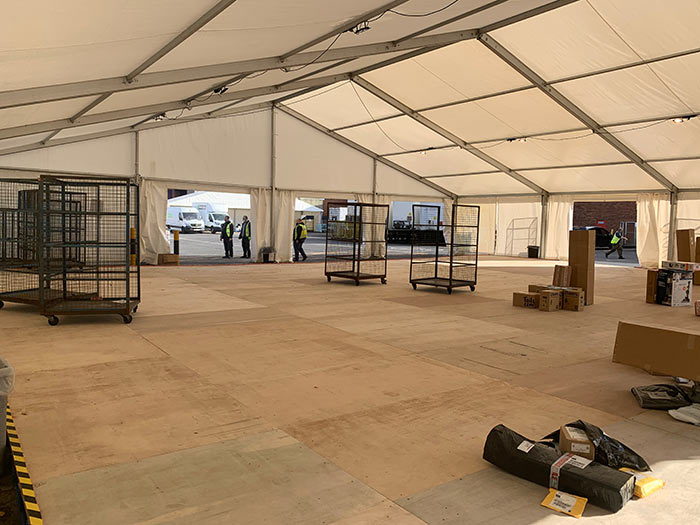
Clear-span structures, which eliminate internal support poles, are often the preferred choice for operational environments. They allow unrestricted movement of vehicles and goods, improving efficiency and reducing risk.
Modern temporary structures for business use can be tailored to mirror the functionality of permanent warehouse space, offering comparable usability without the delays associated with traditional construction.

3. Access and Logistics Flow: Designing for Efficiency
A storage marquee should never be considered in isolation. Its success depends on how effectively it integrates with the wider site.
Poorly planned access can create bottlenecks, increase handling time and introduce unnecessary risk. Conversely, a well-positioned structure can streamline operations and enhance productivity.
Key considerations include:
-
Vehicle entry and exit points
-
Proximity to existing buildings
-
Movement of goods between spaces
-
Requirement for covered loading areas
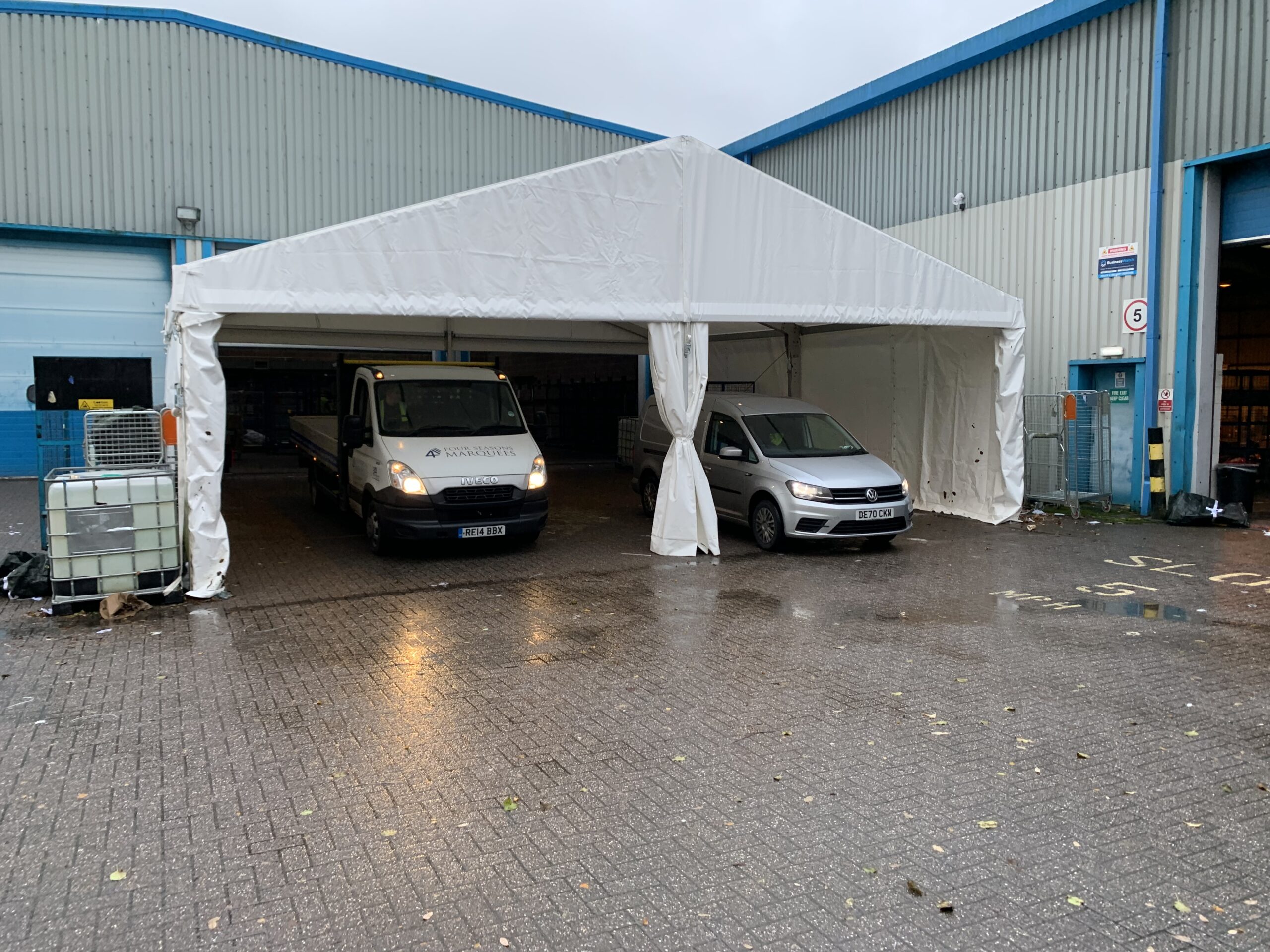
Features such as roller shutter doors, open bays or linked structures connecting directly to existing facilities can significantly improve operational flow.
For businesses operating at scale, even small improvements in layout can deliver measurable gains in efficiency.
4. Ground Conditions and Site Preparation
No two sites are identical, and understanding ground conditions is critical to ensuring a safe and durable installation.
Factors to assess include:
-
Surface type — concrete, tarmac, gravel or grass
-
Load-bearing capacity
-
Drainage and water management
-
Levelling requirements
In many cases, storage marquees can be installed with minimal groundwork, making them an attractive option for sites where permanent development would be disruptive or impractical.
However, careful preparation ensures the structure performs reliably over time, particularly in demanding operational environments.
5. Weather Protection and Environmental Control
The British climate presents a unique set of challenges, and any storage solution must be capable of withstanding variable weather conditions throughout the year.
Modern storage marquees are designed with this in mind, offering robust protection against wind, rain and temperature fluctuations.
Depending on the intended use, businesses may require:
-
Fully enclosed PVC walls
-
Insulated walling systems
-
Temperature regulation
-
Ventilation for airflow and condensation control
For certain applications — particularly where goods are sensitive to moisture or temperature — environmental control becomes a critical design consideration rather than an optional extra.
6. Lighting, Power and Internal Fit-Out
To function effectively, a storage marquee must operate as more than a simple covered space. It should be treated as a fully functional working environment.
Considerations at this stage include:
-
High-quality LED lighting for visibility and safety
-
Power supply for equipment and operations
-
Internal zoning or partitioning
-
Clearly defined walkways and safety markings
These elements are often overlooked in initial planning, yet they play a significant role in usability and staff experience.
A well-equipped structure not only improves efficiency but also contributes to a safer and more professional working environment.
7. Compliance, Safety and Professional Installation
While storage marquees offer flexibility, they must still meet rigorous standards for safety and structural performance.
Working with an experienced provider ensures:
-
Compliance with UK structural and wind load standards
-
Safe anchoring and installation methods
-
Appropriate fire safety measures
-
Clearly defined access and egress points
For businesses operating in regulated sectors, this level of assurance is particularly important. A professionally specified and installed structure provides confidence that operational and safety requirements are fully met.
8. Flexibility and Future-Proofing
One of the defining advantages of storage marquees is their adaptability.
Unlike permanent buildings, they can evolve alongside the needs of the business. This makes them particularly valuable in sectors where demand fluctuates or long-term requirements are uncertain.
Forward-thinking considerations include:
-
The ability to extend or reconfigure the structure
-
Potential changes in use over time
-
Opportunities for relocation if site requirements change
This flexibility is a key reason why many organisations now view storage marquees not as a short-term solution, but as a strategic asset within their wider operational infrastructure.
A Smarter Approach to Space
There has been a notable shift in how businesses approach space planning in recent years.
Rather than committing to permanent expansion, many organisations are adopting a more agile model — one that allows them to respond quickly to changing demands while retaining control over costs and risk.
Storage marquees and temporary structures play a central role in this approach, offering:
-
Rapid deployment
-
Scalable capacity
-
Minimal disruption to existing operations
-
The ability to adapt as requirements evolve
For businesses operating in competitive and space-constrained environments such as the South East, this flexibility is increasingly valuable.
Conclusion: Getting It Right from the Start
A storage marquee is far more than an interim solution. When properly specified, it becomes an integral part of a business’s operational capability.
By carefully considering purpose, design, access, environmental factors and future use, organisations can ensure their structure delivers lasting value.
For businesses across the South East — as well as those operating further afield across the Midlands and into Wales — where the cost of space and the pace of operations continue to increase, investing in the right temporary solution is not simply practical, it is strategic.
Done well, a storage marquee does not just solve an immediate problem. It creates opportunity, efficiency and resilience for the future.