When Is a Temporary Structure the Right Solution? A Practical Guide for Businesses That Need Space Fast
Across sectors from retail and logistics to manufacturing and construction, one operational challenge appears again and again: running out of space.
Stock levels fluctuate, projects expand, seasonal demand spikes and supply chains shift. When this happens, businesses often assume the only option is to expand their buildings or relocate operations.
But increasingly, organisations are choosing temporary structures and storage marquees as a fast, flexible alternative.
Rather than waiting months — or years — for permanent construction, these adaptable structures can create covered operational space within days.
This article explores when a temporary structure makes sense, and why more UK businesses are adopting them as a strategic solution for space management.
The Challenge of Business Space Planning
Space requirements rarely remain static.
A warehouse that works perfectly in January may feel inadequate by October. A production facility designed for current output might struggle when orders increase. Even outdoor operations can require covered working areas during poor weather.
Traditional building expansion has several drawbacks:
-
Planning permission delays
-
High capital costs
-
Long construction timelines
-
Permanent commitment even if demand later changes
For many organisations, these factors make permanent expansion too slow or too risky.
Temporary structures offer a different approach — scalable space that adapts with the business.

Situations Where Temporary Structures Make the Most Sense
Temporary buildings are not just emergency solutions. They are increasingly used as planned operational infrastructure.
1. Rapid Business Growth
Fast-growing companies frequently face a dilemma: demand increases faster than infrastructure can keep up.
Temporary structures allow businesses to create additional space quickly while planning longer-term development.
Typical uses include:
-
Additional warehouse capacity
-
Overflow pallet storage
-
Dispatch and packaging areas
-
Covered loading zones
Because installation is fast, companies can respond immediately to increased demand rather than turning down orders.
2. Supply Chain Disruption
Recent global supply chain disruptions have forced companies to hold larger stock volumes than usual.
Businesses that previously relied on just-in-time delivery now need additional buffer storage to maintain operational resilience.
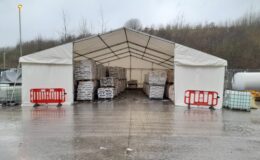
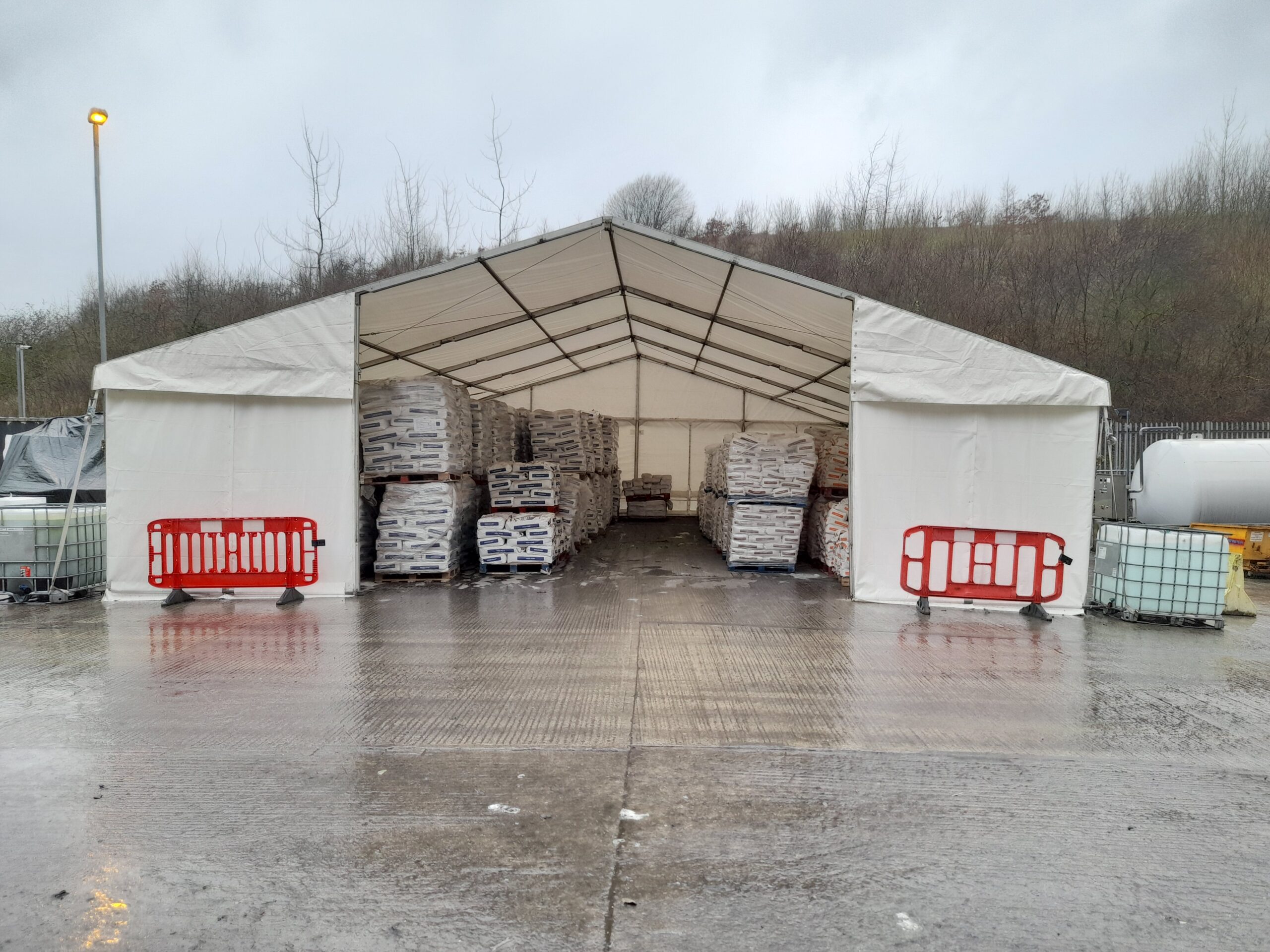
Storage marquees provide a practical solution, offering secure, weather-protected storage that can be installed adjacent to existing facilities.
More details about these structures can be found on the Four Seasons Marquees page dedicated to temporary structures for business operations.
3. Construction and Redevelopment Projects
During building refurbishment or expansion projects, operational space is often temporarily reduced.
Temporary structures can act as:
-
Interim warehouses
-
Equipment storage areas
-
Temporary workshops
-
Staff facilities
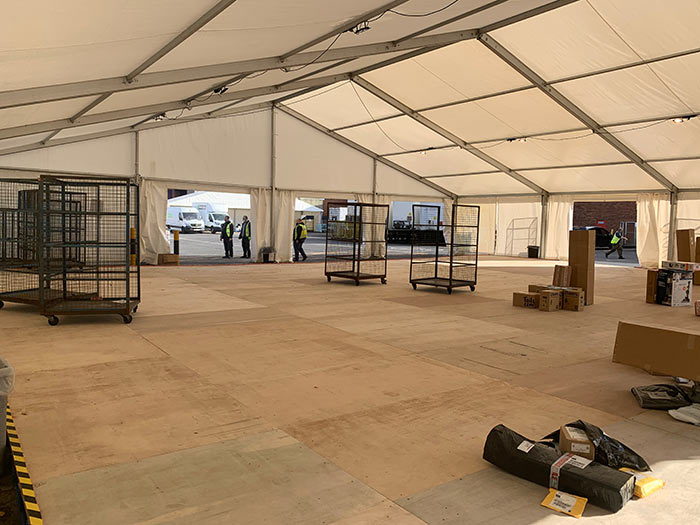
By creating alternative working space, businesses can maintain operations while construction work takes place.

4. Seasonal Demand Peaks
Certain industries experience predictable seasonal surges.
Examples include:
-
Retail distribution centres before Christmas
-
Agricultural supply businesses in harvest periods
-
Garden centres and outdoor retailers in spring
-
Event and hospitality venues during summer
Installing a temporary structure allows businesses to expand capacity during peak periods and adjust space afterwards if required.

Why Storage Marquees Are a Practical Solution
Among the various temporary building options available, storage marquees have become particularly popular due to their versatility and rapid installation.
Modern structures are far removed from the traditional image of a simple tent. Today’s systems can include:
-
High-strength aluminium frames
-
durable PVC roofing and walls
-
optional insulated panels
-
integrated flooring systems
-
lighting and heating solutions
These features create a controlled environment suitable for a wide range of operational uses.
Businesses interested in exploring these options can learn more about storage marquees and their applications on the Four Seasons Marquees website.
Speed of Deployment: A Key Advantage
One of the most compelling benefits of temporary structures is speed.
Permanent building projects often involve:
-
architectural design
-
planning approval
-
contractor scheduling
-
construction delays
Temporary structures, by contrast, can typically be installed within a matter of days or weeks depending on size and specification.
For businesses facing urgent operational pressures, this rapid deployment can make a critical difference.
Cost Efficiency and Flexibility
Another important advantage is financial flexibility.
Because temporary structures require significantly less upfront investment than permanent buildings, they allow businesses to manage capital expenditure more carefully.
They also provide flexibility if circumstances change.
For example, a structure installed for seasonal storage can later be repurposed for:
-
equipment storage
-
manufacturing overflow
-
sheltered working areas
-
vehicle or fleet protection
This adaptability means the structure continues to deliver value beyond its original purpose.
Planning and Compliance Considerations
While temporary structures are faster to deploy than permanent buildings, it is still important to consider planning requirements, site preparation and operational needs.
Factors that typically influence design include:
-
ground conditions
-
vehicle access requirements
-
storage height needs
-
wind and weather exposure
-
operational workflow
Working with an experienced supplier ensures the structure is designed to suit both the site and the operational requirements of the business.
A Strategic Approach to Space
Perhaps the biggest shift in recent years is how businesses view temporary buildings.
What was once considered a short-term fix is now widely recognised as a strategic space solution.
Temporary structures allow organisations to:
-
expand capacity quickly
-
respond to changing demand
-
manage risk during uncertain periods
-
optimise existing sites without relocation
For many companies, they represent the most efficient way to balance flexibility with operational resilience.
Creating Space When You Need It
Space challenges rarely arrive with months of warning. More often, they appear suddenly as demand increases, projects evolve or supply chains shift.
Temporary structures and storage marquees provide a practical, adaptable way to meet those challenges without the delays associated with permanent construction.
Businesses looking to explore these options can learn more about temporary structures for operational space and storage marquees for flexible storage solutions on the Four Seasons Marquees website.