Marquee Hire in London: Planning for Rooftops, Courtyards and Restricted Access Sites
Marquee hire in London is rarely straightforward.
Unlike the open lawns of Hampshire or the expansive gardens of Surrey, central London sites present a different set of challenges. Rooftop terraces, enclosed courtyards, listed buildings and narrow access routes all demand a more technical, carefully managed approach.
Yet these constraints are precisely where well-designed temporary structures come into their own. With considered planning, detailed weight calculations and logistical precision, marquees can transform even the most restricted urban sites into elegant, fully functional spaces.
For corporate clients, private hosts and healthcare providers alike, London marquee hire is as much about engineering and access strategy as it is about aesthetics.
Why London Sites Require a Different Approach
When clients search for “marquee hire London”, they are often unaware of the additional planning layers involved.
Urban environments introduce complexities such as weight restrictions on rooftops and terraces, limited delivery access, congested surrounding streets, noise and installation time constraints, listed building considerations, fire regulations and restricted crane access.
A successful London installation begins long before any structure arrives on site. It requires collaboration with facilities managers, structural engineers and property owners to ensure compliance and safety.
Rooftop Marquees in London
Rooftop installations represent one of the most technically demanding applications of temporary structures in the capital.
Unlike ground-based installations, rooftop marquees cannot rely on traditional staking methods. Instead, they must be supported using precisely calculated ballast systems to distribute weight safely within the building’s engineering tolerances.
Every installation requires detailed load calculations, wind loading assessments, access planning for materials and protection of roof membranes.
A recent example involved the installation of a 9m x 9m clear span aluminium frame marquee on the rooftop terrace of BUPA Cromwell Hospital in South Kensington during refurbishment works. The structure was supported entirely by calculated ballast weights and all materials were transported internally without craneage, maintaining hospital operations throughout.
Courtyard Marquee Hire in Central London
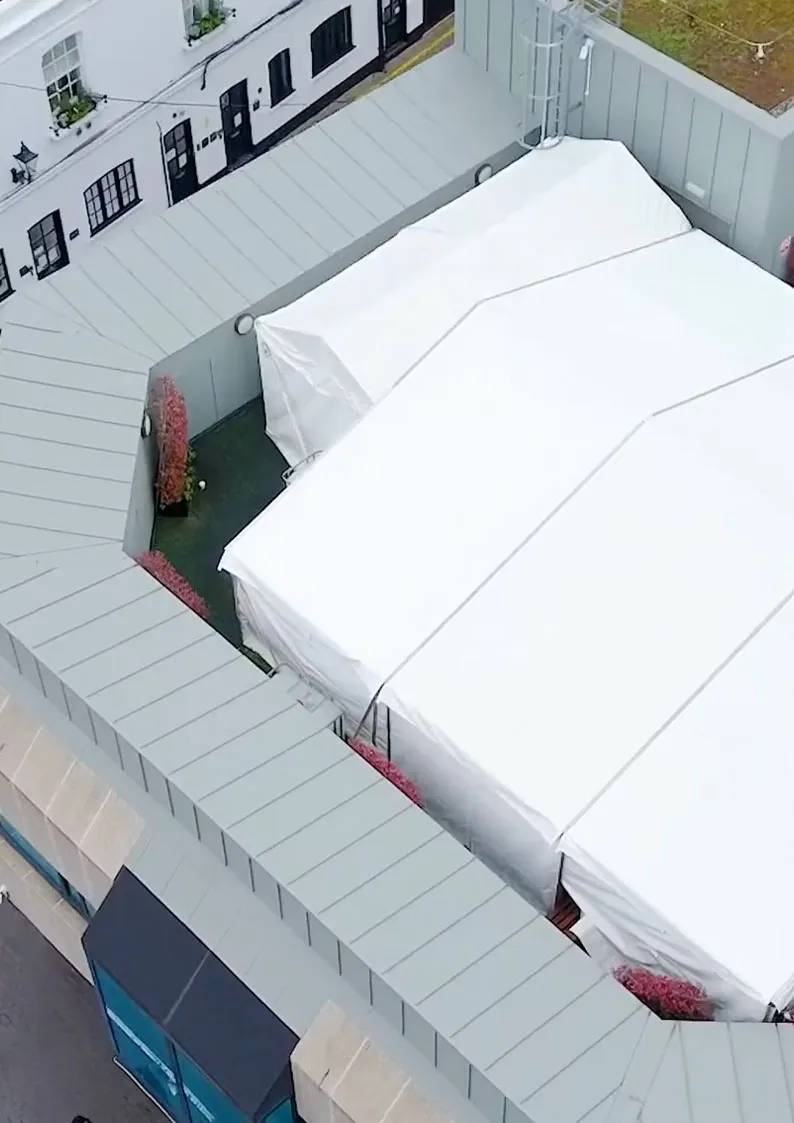
London’s private courtyards offer exceptional event potential — but often with limited access widths and height restrictions.
Common challenges include archway access, shared residential entry points, underground services and drainage considerations.
Clear span aluminium frame marquees are frequently preferred due to their modular construction and ability to be assembled within confined areas using weighted systems where staking is not permitted.
Working Within Restricted Access Sites
Many London venues operate continuously. Installation must therefore be discreet, efficient and minimally disruptive.
Restricted access sites require manual handling plans, phased delivery scheduling, coordination with onsite teams, detailed risk assessments and compliance with fire egress requirements.
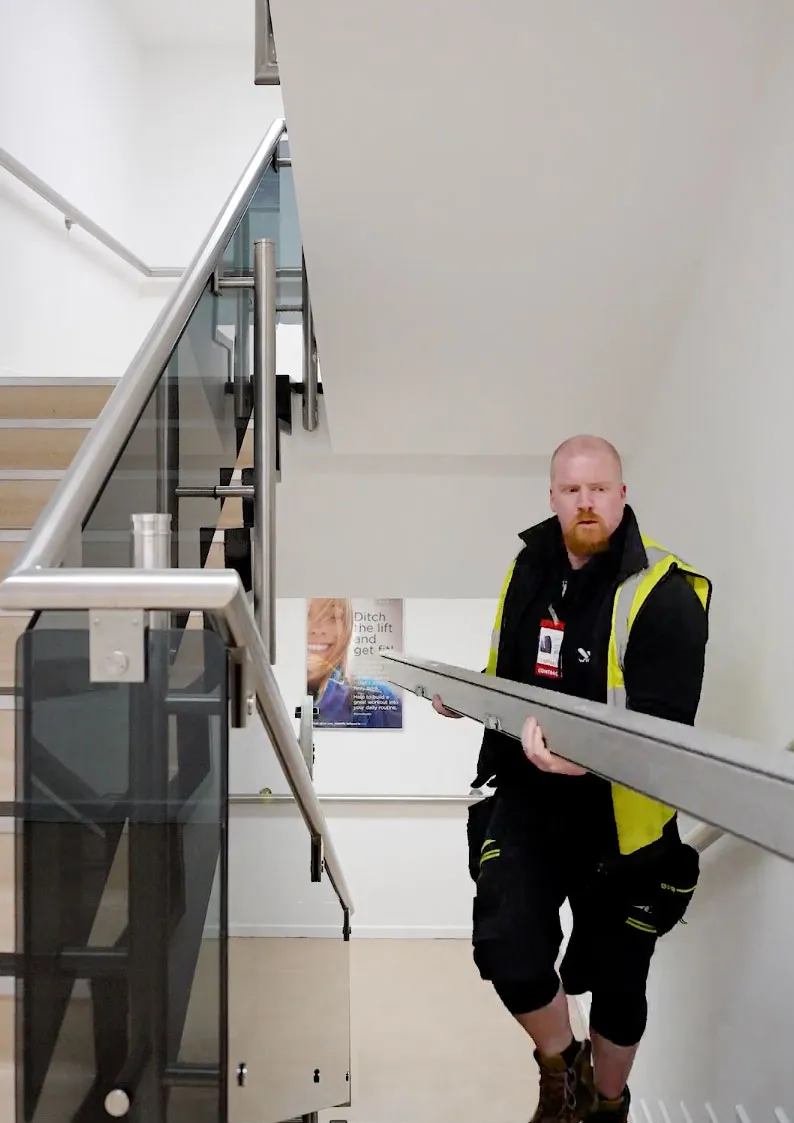
In certain cases, components must be transported entirely by hand, allowing installations to proceed without road closures or heavy machinery.
Structural Considerations in the Capital
Wind exposure in London differs markedly from rural settings. Rooftop terraces can experience unpredictable gust patterns due to surrounding buildings.
Structural specification must account for wind speed ratings, ballast weight calculations, building edge proximity and emergency access routes.
Professional London installations involve formal documentation and method statements, particularly within healthcare and corporate environments.
Integrating Marquees with Existing Buildings
Temporary structures in London often need to connect seamlessly to permanent buildings.
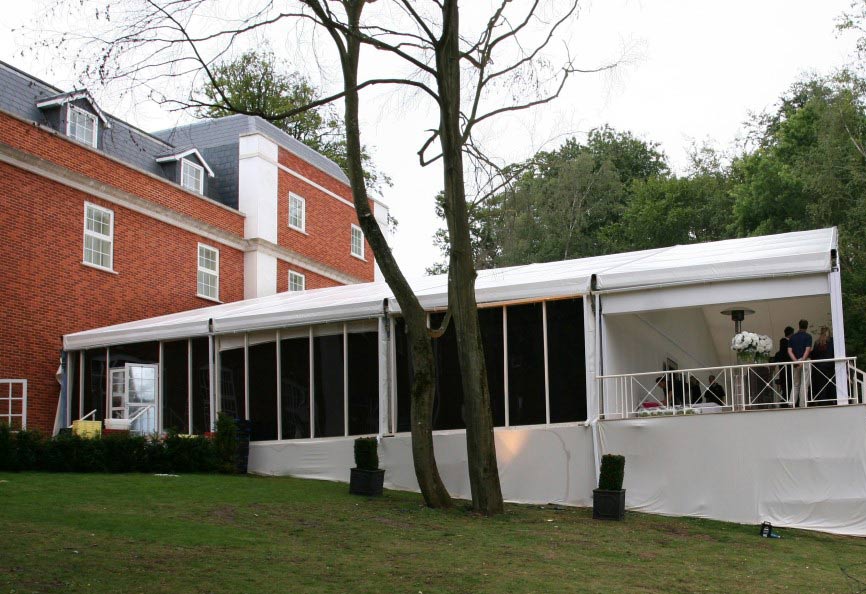
This may involve covered walkways, weatherproof link corridors, temporary entrance canopies and integration with building safety systems.
Where installations run for extended periods, the structure must function as a genuine extension of the building rather than a standalone tent.
Applications Beyond Events
While marquee hire in London is often associated with weddings and corporate functions, many installations are operational rather than celebratory.
These may include temporary dining facilities during refurbishments, waiting areas, triage spaces, office overflow accommodation and secure storage zones.
Planning Timeline for London Marquee Hire
London projects benefit from early engagement.
A typical planning process includes consultation, site visit, structural assessment, method statement preparation, coordination with building management and scheduled installation.
Lead times may be longer than rural installations, particularly where permissions or engineering approvals are required.
Choosing the Right Marquee Partner in London
Not all marquee hire companies are equipped to operate effectively in central London.
Experience in restricted urban sites, ballast-based installations, manual logistics and knowledge of borough requirements is essential.
Conclusion
Rooftops, courtyards and confined terraces present challenges — but when approached correctly, they offer some of the most striking and functional temporary spaces in the capital.
Marquee hire in London is less about scale and more about precision.
If you are considering a rooftop marquee, courtyard installation or temporary structure within a restricted London site, early consultation is key.
Contact Four Seasons Marquees on 01420 488477 or visit www.fourseasonsmarquees.co.uk to discuss your project.